


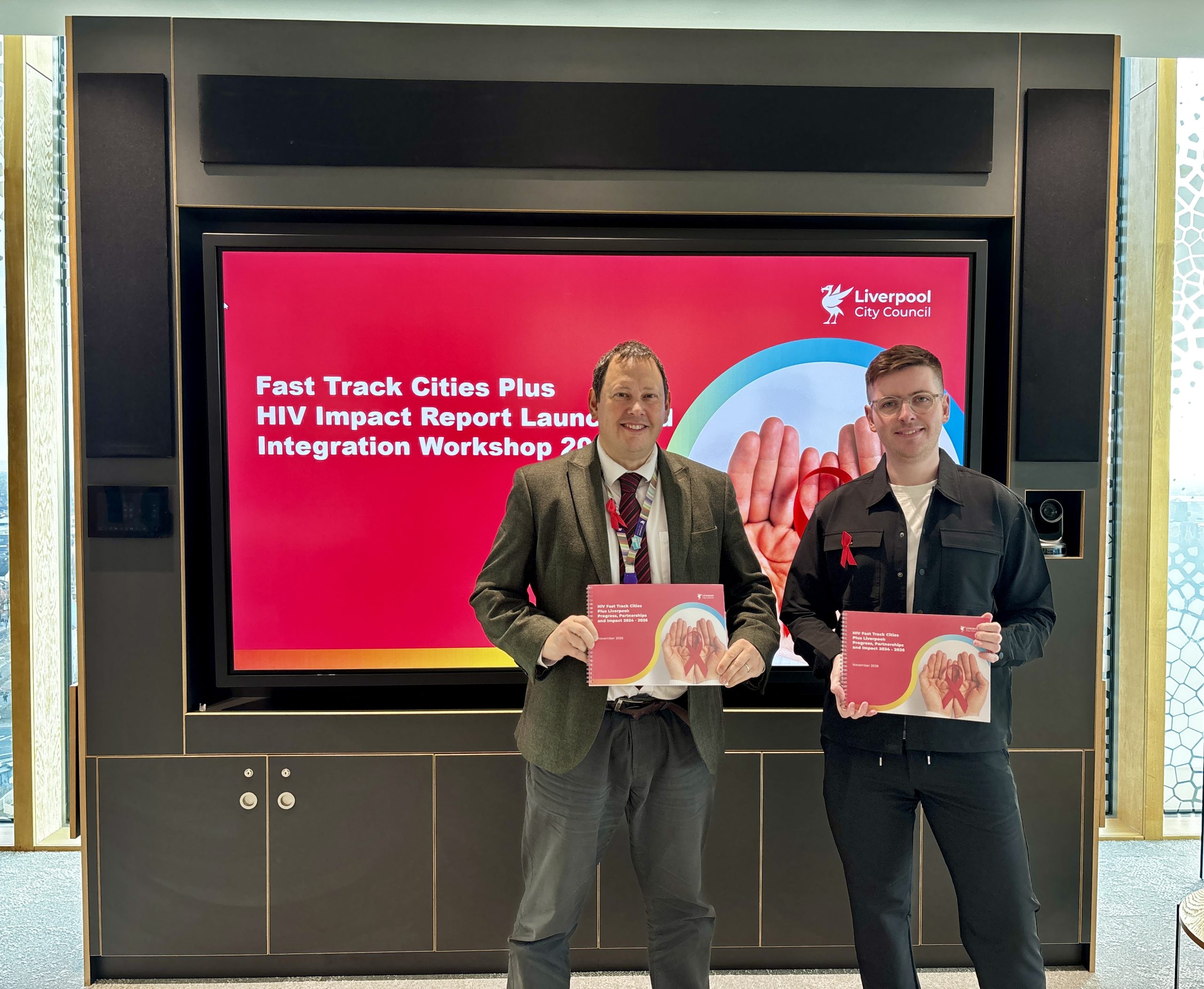
Liverpool Fast Track Cities+ partners unveiled a new two-year impact report (2024-2026) at a workshop yesterday, showcasing progress in improving local health outcomes.
Stakeholders also agreed an updated action plan to accelerate work on tackling HIV, viral hepatitis and tuberculosis (TB), building on the city-wide commitment to Fast Track Cities+ status, announced earlier this year.
The FTC+ commitment, made in February 2026, marked an important next step in Liverpool’s long-standing work to tackle HIV, expanding the city’s focus to include all blood-borne viruses and TB. Partners pledged to work together to end new HIV transmissions and AIDS-related deaths by 2030, eliminate new hepatitis B and C infections by 2030, and achieve a 90% reduction in TB incidence by 2035.
The new action plan sets out how partners aim to turn that commitment into action.
For residents, this means continuing to improve access to testing, prevention, treatment and support, while making sure people can access the care they need without fear of judgement or discrimination.
Liverpool has already made significant progress in its response to HIV. The estimated number of people living with undiagnosed HIV in the city has fallen from 115 to around 45 over four years, while the proportion of people receiving a late diagnosis has reduced from 56.7% to 36.1% over three years.
More people are also being reached through testing, with 108,889 HIV tests carried out across sexual health services and hospital A&E departments in the previous year. Earlier diagnosis means people can access treatment sooner, helping them to stay well and reducing the risk of passing on the virus.
The action plan sets out how partners will build on this progress by improving access to HIV prevention medication such as PrEP, making testing more accessible and reaching communities who may otherwise miss out. It also focuses on supporting people to access and remain in treatment and care, improving understanding of HIV and challenging the stigma and barriers that can stop people seeking help.
This work is supported by organisations across Liverpool, including Liverpool City Council, NHS, voluntary and community groups, and people with lived experience. Initiatives include taking services into communities, providing more tailored support and helping people who may have disengaged from care to reconnect with services.
The expanded Fast Track Cities+ commitment also recognises that tackling these infections is not just about healthcare. Poverty, housing, migration and wider inequalities can all affect people’s health and their ability to access support. Partners will continue working together to make services more accessible and ensure communities are not left behind.
Councillor Harry Doyle, Cabinet Member for Health, Wellbeing and Culture, said:
“Everyone in Liverpool should be able to access the health advice, testing and support they need, without worrying about being judged or treated differently.
“We have made real progress in our work to tackle HIV, but we know there is more to do. Becoming a Fast Track Cities+ city gives us the opportunity to build on what is working, reach more people and make sure support is available to everyone who needs it.
“By working together with our NHS, voluntary and community partners, we can help make Liverpool a fairer, healthier city where people feel confident seeking support.”
Professor Matthew Ashton, Director of Public Health for Liverpool City Council, said:
“The progress we have made shows what is possible when health services, community organisations and people with lived experience work together.
“More testing, earlier diagnosis and access to effective treatment are making a real difference to people’s lives. But we also need to address the stigma and inequalities that can stop people from getting tested or accessing care.
“Fast Track Cities+ gives us a wider opportunity to tackle HIV, viral hepatitis and TB together, improve access to support and make sure our approach reflects the needs and experiences of Liverpool’s communities.”
Getting advice, testing and support
Anyone with questions about their sexual health, or who wants to access confidential advice and testing, can contact Axess Sexual Health. Its services include STI testing and treatment, HIV testing and prevention options such as PrEP and PEP. Visit www.axess.clinic or call 0300 323 1300.
People can access support Liverpool PaSH (Prevention and Support for HIV) provides free, confidential support to people affected by HIV, alongside education, prevention and sexual health initiatives that help reduce transmission and improve wellbeing across the city –Home – LPaSH
People living with HIV can also access practical and emotional support through organisations including George House Trust, which offers advice, peer support and counselling. Visit www.ght.org.uk or call 0330 174 4433.
Sahir provides support for LGBTQ+ people, including advice, counselling and peer support. Visit www.sahir.org.uk or call 0151 673 1972.
Find out more about sexual health services in Liverpool at: https://liverpool.gov.uk/public-health/live-your-life-well/sexual-health/