


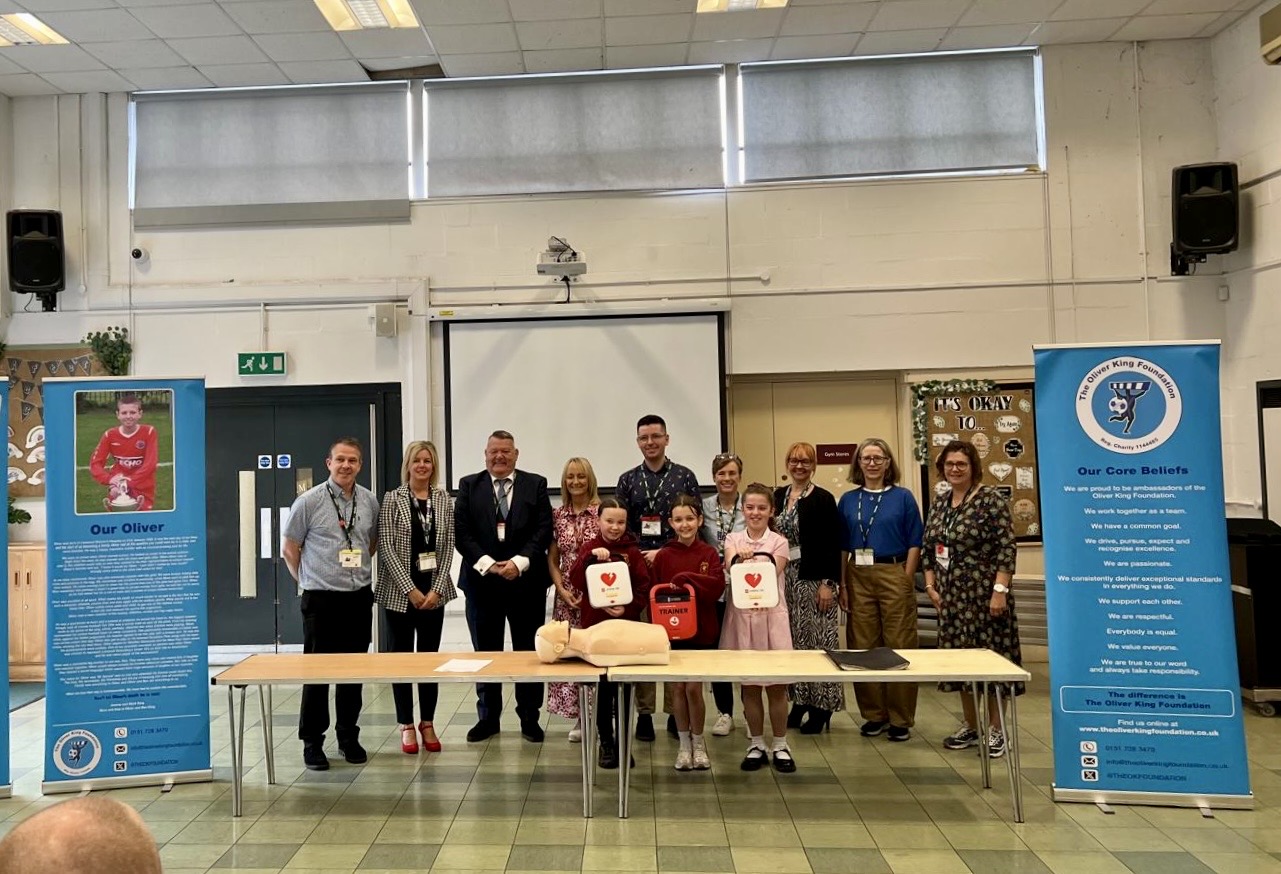
Liverpool City Council has launched a new citywide initiative to support schools in responding effectively to cardiac emergencies, with the first training session taking place today (Tuesday 19 May) at Rice Lane Primary School.
The programme brings together Public Health, Education, School Improvement Liverpool (SIL), the Oliver King Foundation, and the Council’s Health and Safety Unit to ensure that every school is equipped, trained and prepared to act in the event of a cardiac arrest.
While cardiac arrest in children is still relatively uncommon, these events can occur without warning, so improving access to defibrillators remains crucial. The initiative follows national research from the University of Warwick showing that 617 cardiac arrests occurred in under-18s across the UK in 2024 (around 12 each week) with only one in eight children surviving. The figures highlight the importance of rapid intervention, including immediate CPR and access to defibrillators.
The issue remains deeply personal for Liverpool. In 2012, 12-year-old Oliver King tragically died after suffering a cardiac arrest following a swimming race at King David High School. In response, his father Mark King founded the Oliver King Foundation to campaign for greater access to defibrillators and CPR training.
The new project seeks to build on this legacy by:
- Assessing the coverage of defibrillators and CPR-trained staff across all Liverpool schools
- Ensuring all defibrillators are registered on the national network, The Circuit, so emergency services can locate them quickly
- Providing high-quality CPR and defibrillator training for school staff
- Supporting schools to raise awareness among pupils, staff and communities about life-saving skills and emergency readiness
The programme is part of a wider, coordinated approach to improving health and wellbeing across school communities, ensuring that pupils, staff and visitors are safer.
Councillor Harry Doyle, Cabinet Member for Health, Wellbeing and Culture, said:
“This is a vital initiative that will help save lives in our schools and communities. Every second counts in a cardiac emergency, and making sure staff are trained, equipment is available, and systems are in place can make the difference between life and death.
“We will never forget Oliver King, and we are deeply sorry for the loss his family has endured. Through this work, and in partnership with the Oliver King Foundation, we are determined to honour his legacy by ensuring schools across Liverpool are as prepared as they can be.”
Professor Matt Ashton, Director of Public Health for Liverpool City Council, said:
“Cardiac arrest can happen without warning, even in young people. The evidence is clear that early CPR and rapid access to a defibrillator dramatically improve survival rates.
“This programme is about giving schools the knowledge, skills and confidence to respond quickly and effectively. By working collaboratively across health, education and the voluntary sector, we are strengthening emergency readiness and helping to protect children, staff and the wider community.”
Mark King OBE, Founder of the Oliver King Foundation, said:
“Losing Oliver was devastating, and no family should ever have to go through that pain. What we’ve always wanted is to make sure something positive comes from his legacy by improving access to defibrillators and ensuring people have the confidence to use them.
“This project is a huge step forward for Liverpool. By training school staff and raising awareness, we are giving young people the best possible chance if the worst happens. I’m proud to be working with the Council and partners to help save lives.”
As part of the initiative, Public Health Liverpool has funded the Oliver King Foundation and SIL to coordinate CPR and defibrillator training, with at least two training places offered per school.
The project also aims to increase the number of school defibrillators registered on The Circuit, ensuring North West Ambulance Service can direct first responders to nearby devices in an emergency. Where possible, schools will also be encouraged to make defibrillators accessible to the wider community.
In support of the programme, the Directors of Public Health and Education have jointly written to headteachers and chairs of governors across primary, secondary and special schools, calling for their engagement and commitment.
This initiative builds on the Government’s rollout of defibrillators to all state-funded schools in 2023 and aligns with Department for Education guidance on CPR training and emergency preparedness.