

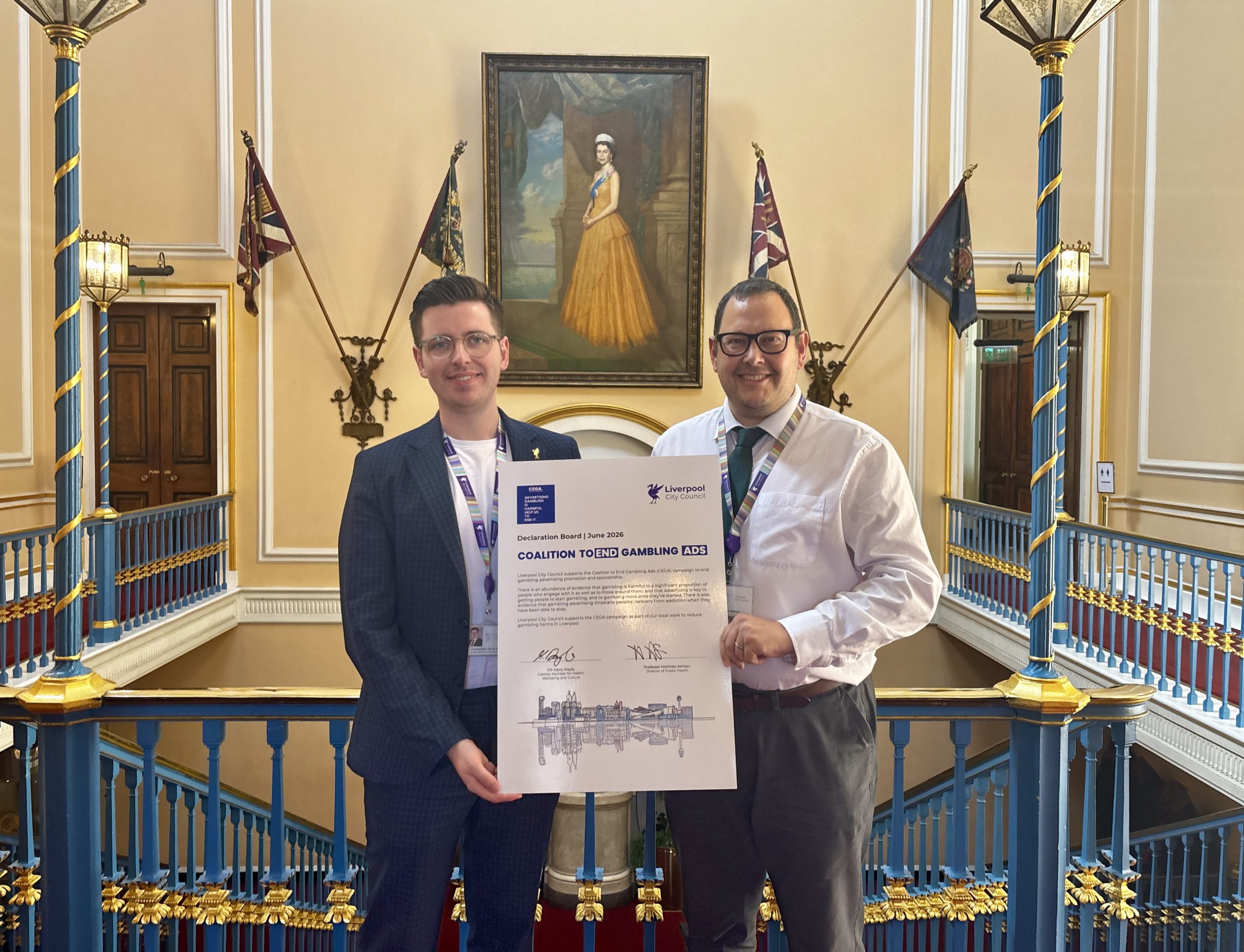
Liverpool City Council has joined a national coalition calling for an end to gambling advertising, as part of its commitment to reducing gambling-related harm across the city.
The Council has become the latest local authority to join the Coalition to End Gambling Ads (CEGA), a growing alliance of councils, public health organisations, charities and campaign groups working to reduce the impact of gambling advertising on communities.
The move builds on Liverpool’s Reducing Gambling Harms Action Plan, launched earlier this year, which sets out a citywide approach to preventing gambling-related harm through early intervention, improved access to support and action to reduce people’s exposure to gambling.
The need for action is significant. Around one in six young adults in Liverpool experience gambling-related harm, with men and people facing financial disadvantage at greatest risk. Gambling can lead to debt, poor mental health, relationship breakdown, homelessness and involvement with the criminal justice system, while stigma often prevents people from seeking help.
Gambling harm particularly affects young people and disadvantaged communities, and Liverpool City Council is taking a stand against harmful advertising that disproportionately targets and impacts some of the city’s most vulnerable residents.
The gambling industry spends around £2 billion a year on advertising, embedding gambling into everyday culture and exposing millions of people, including children and young people, to gambling marketing across television, social media, sport and public spaces.
Liverpool has previously supported initiatives to raise awareness of gambling harms, including campaigns in partnership with Chapter One linked to major sporting events such as the FIFA World Cup, when gambling advertising and promotional activity can increase significantly. Through partnership work and public health campaigns, the Council has sought to encourage informed conversations about gambling harms and available support.
Councillor Harry Doyle, Cabinet Member for Health, Wellbeing and Culture, said:
“Gambling harm has real and practical consequences. It can leave people struggling with debt, damage relationships, affect mental health and place huge pressure on families.
“Through our Reducing Gambling Harms Action Plan we’ve committed to preventing harm wherever we can, making support easier to access and creating healthier environments for our residents.
“Joining CEGA is an important part of that commitment. Gambling advertising is now everywhere, from TV and social media to sport and public spaces, and we know that constant exposure helps normalise gambling, particularly for children and young people.
“Liverpool is proud to join councils across the country in calling for stronger action to protect people from gambling-related harm.”
Professor Matthew Ashton, Director of Public Health for Liverpool City Council, said:
“Preventing gambling harm isn’t just about supporting people once problems develop, it’s about reducing the factors that increase risk in the first place.
“Our Action Plan takes a public health approach, bringing together partners across health, education, social care and the voluntary sector to improve prevention, raise awareness and strengthen support.
“Joining CEGA allows Liverpool to play its part in a growing national movement calling for evidence-based changes to gambling advertising that will help create healthier communities.”
Will Prochaska, Director of the Coalition to End Gambling Ads (CEGA), said:
“Liverpool City Council is showing real leadership by recognising the harm gambling can cause and taking action to help prevent it.
“By joining CEGA, Liverpool is adding its voice to a growing coalition calling for policies that put public health ahead of gambling industry interests. Together we can build the momentum needed to better protect children, young people and those most vulnerable to gambling harm.”
Liverpool’s Reducing Gambling Harms Action Plan brings together partners from health, social care, education, criminal justice and community organisations to provide coordinated support, improve treatment pathways and tackle the stigma that prevents people from seeking help.
Joining CEGA is the latest step in delivering the Action Plan’s commitment to reduce exposure to gambling through responsible licensing, advertising policies and wider public health advocacy.
CEGA now includes 16 local authorities alongside leading public health organisations including the Association of Directors of Public Health, the Royal Society for Public Health and the Faculty of Public Health, as well as gambling harm charities, campaign groups and football clubs united in calling for tighter restrictions on gambling advertising.
Anyone worried about their own gambling, or someone else’s, can access support through Liverpool’s local gambling harm services, the NHS Northern Gambling Service: https://www.northerngamblingservice.nhs.uk/